Blog

PSF Blog

Helpful Guides & Knowledge

Stay informed with advice on insulation, energy savings, and building performance.

How Insulating Your Home Increases Its Value and Reduces Mortgage Payments

How Insulating Your Home Increases Its Value and Reduces Mortgage…

Introduction Living in Ireland means dealing with damp weather and unpredictable conditions, which can make mould and damp common problems in many homes. Proper insulation…

Can Spray Foam Insulation Be Used in Cavity Walls?

Can Spray Foam Insulation Be Used in Cavity Walls?

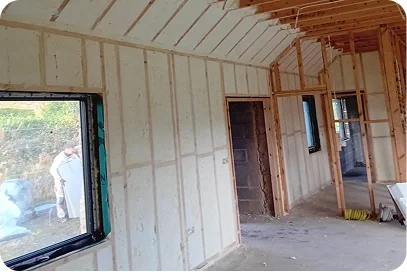
Can Spray Foam Insulation Be Used in Cavity Walls? In Ireland, the comfort of your home depends heavily on proper insulation, especially when facing unpredictable…
Does Spray Foam Insulation Protect from Mould and Damp in Irish Homes?

Does Spray Foam Insulation Protect from Mould and Damp in…

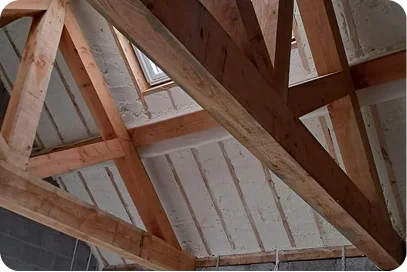
Does Spray Foam Insulation Protect from Mould and Damp in Irish Homes?   Mould and dampness are persistent problems in many Irish homes, caused by…

Ready to Improve Comfort & Reduce Energy Costs?

Get Your Free Property Assessment & Insulation Quote

Our team will visit your property, assess your current insulation levels, identify areas of energy loss, and provide a clear, transparent quotation. No pressure. No obligation. Just expert guidance and real savings you can feel.

Get Your Free Consultation

FAQ

Spray Foam Insulation FAQs

Find answers to common questions about spray foam insulation.

The R-value depends on the type of spray foam used:

Open-cell spray foam: R-3.5 to R-4 per inch

Closed-cell spray foam: R-6 to R-7 per inch
Closed-cell foam offers almost double the insulation performance per inch, making it ideal for roofs, walls, and external applications.

Yes. Open-cell spray foam is especially effective for sound reduction because of its soft, flexible, and air-absorbing structure. It helps reduce airborne noise such as voices, TVs, traffic sound, and machinery.
Closed-cell foam also reduces noise but is primarily designed for thermal performance and structural strength.

Closed-Cell Foam:

Higher R-value (R-6 to R-7 per inch)

Acts as a vapour barrier

Adds structural strength

Best for roofs, external walls, metal buildings, sheds, and commercial units

Open-Cell Foam:

Lower R-value (R-3.5 to R-4 per inch)

Excellent soundproofing

More cost-effective

Ideal for attics, interior walls, ceilings, and residential spaces

Each type is chosen based on the building requirements and conditions.

Yes. There are two primary types:

  1. Open-Cell Spray Foam

    • Soft, breathable, expands greatly

    • Best for attics, ceilings, residential interior spaces

  2. Closed-Cell Spray Foam

    • Dense, rigid, moisture-resistant

    • Suitable for roofs, walls, floors, sheds, containers, and commercial/agricultural buildings

Both types use NSAI-certified, Agrément-approved products.

No. Spray foam insulation should only be installed by trained, certified professionals.
The equipment, chemical handling, ventilation requirements, and correct application techniques are specialised and must meet Irish building regulations.
DIY installation can lead to health risks, poor performance, or damage to the property.

Have Any Other Question?

Get in Touch, We're Here to Help

We’re available to answer your questions and provide expert advice.